
Artificial Intelligence Applied to Non-Intrusive Cargo Inspection
Data-driven management solving real problems. VMI Security’s artificial intelligence analyzes X-ray images, checks the result against the declared invoice and supports decision-making, significantly improving inspection performance.
Poor Port Performance Holds Back Competitiveness and National Security
Its effects reach the entire logistics chain.
Low Productivity: The Cost of Inefficiency
Long waits for ships to berth and excessive bureaucracy generate high costs that are passed on along the entire logistics chain.
Long Inspection Times: Foreign Trade on Hold
Higher storage costs, lost agility, and less legal certainty and predictability.
Low Detection Rates: An Open Door to Organized Crime
Poor inspection performance doesn’t just add costs: it opens dangerous security gaps for international drug trafficking, smuggling and piracy.
The price of not solving it: longer queues and waiting times, sanctions from law enforcement agencies and even the loss of the operating license.
Do We Really Need AI? What Real Operations Show
VMI Security analyzed the inspection data of two real operations: a road fiscal checkpoint and a seaport.
Figures from the real scenarios
inspections per day on average at a road fiscal checkpoint, over 536 days observed.
is the median time a truck driver waits for the cargo to be inspected and released (mean of 55.65 min, from 133,955 observations).
inspections per day in a real port operation, out of 27,774 inspections analyzed.
of the loads contain one of only 14 product categories.
of the loads are homogeneous: a highly favorable scenario for automated AI inspection.
A Productivity and Efficiency Gain for Port Operations
Artificial intelligence shortens inspection time and reduces the need for additional checks by human agents, for safer and more efficient operations.
in average analysis time per container.
in the anomaly detection rate.
in productivity.
Data: The Most Valuable Asset for Decision-Making
Artificial intelligence is not just a tool: it is the engine that turns raw data into actionable insights. High-performance management starts with collecting quality data and ends with applying it intelligently.
Raw Data
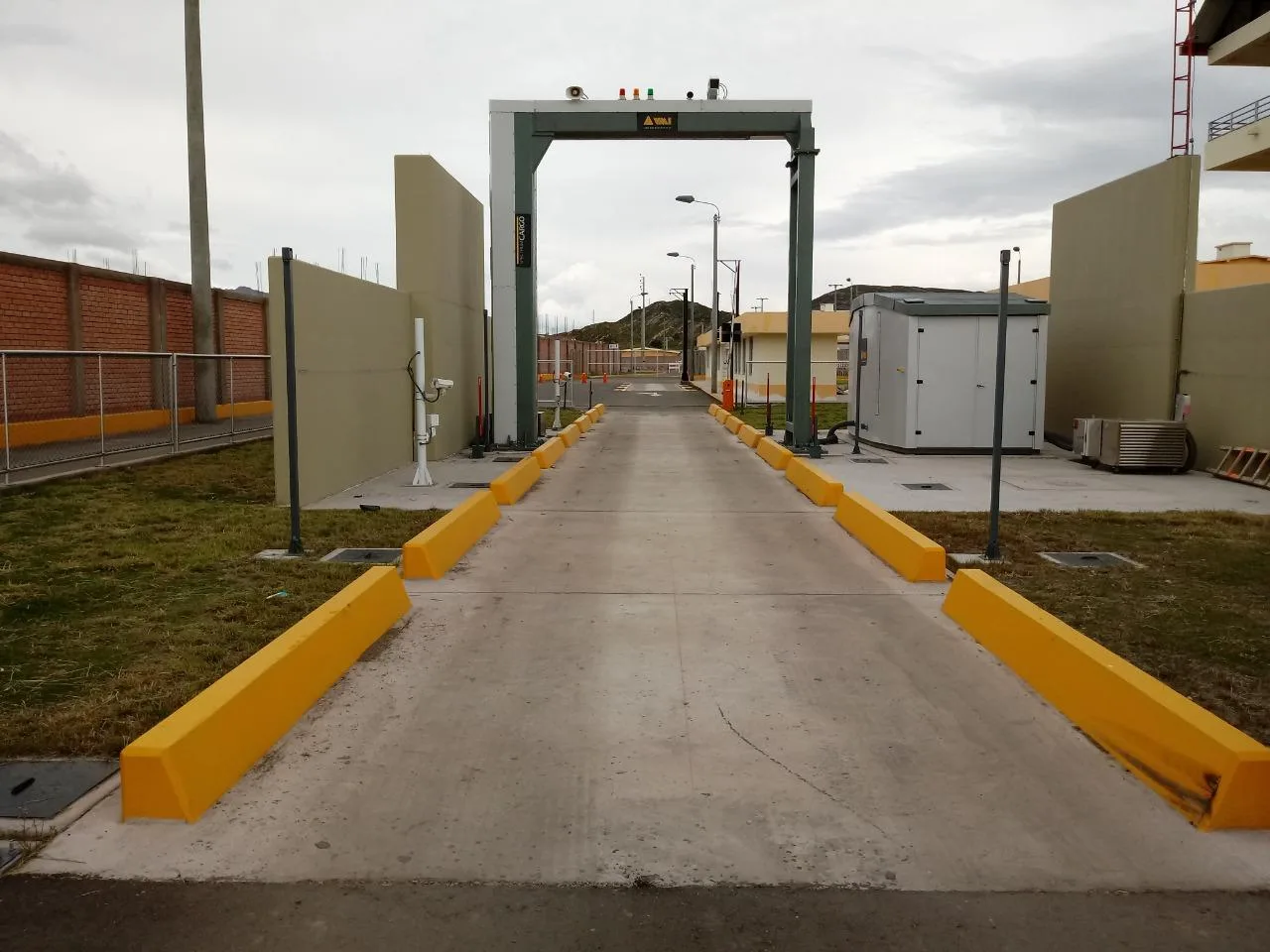
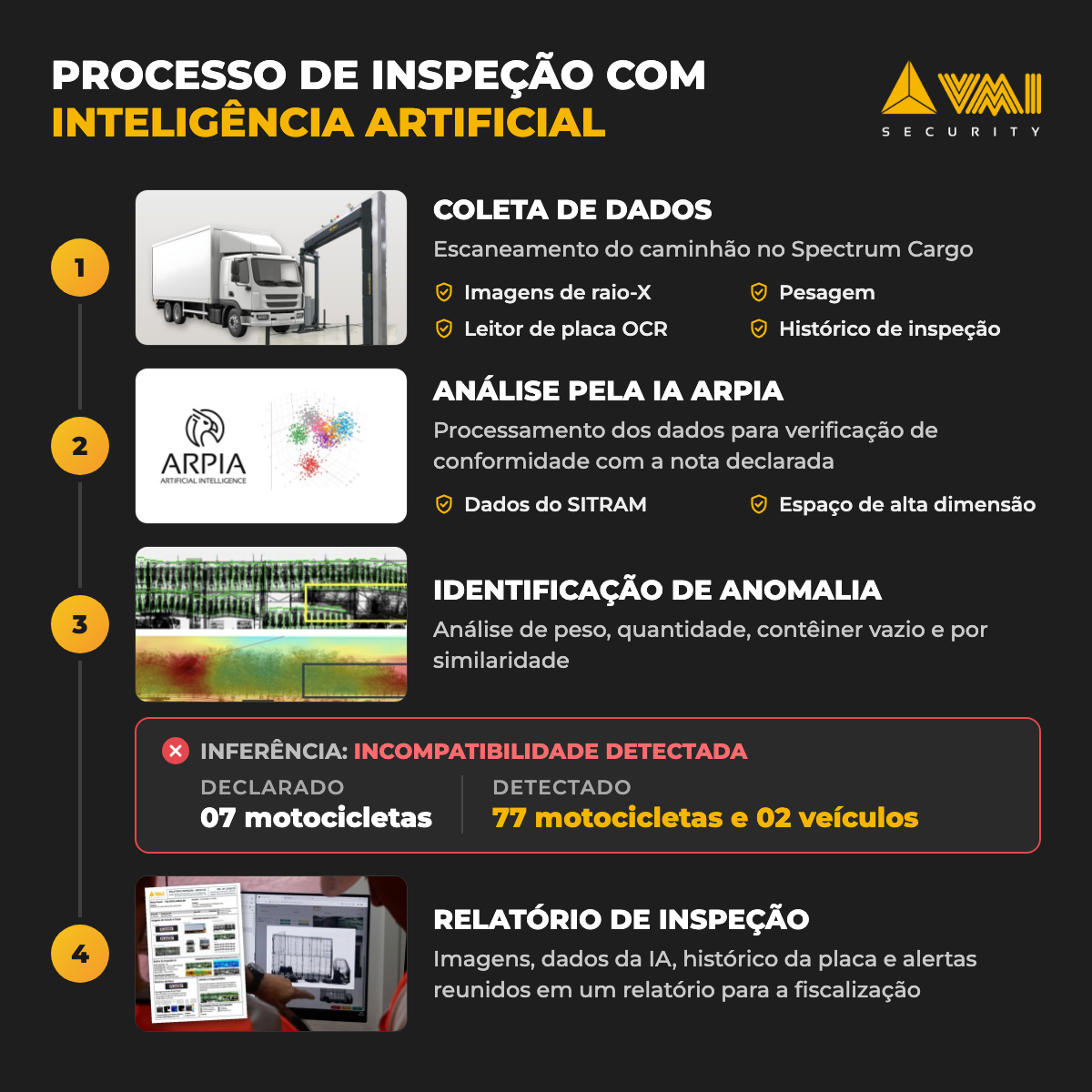
The Spectrum Cargo scanner collects and transmits data in real time: X-ray images, dimensions and weight, license plate reading (OCR), radiation detection, inspection history and the cargo’s documents.
AI Analysis
Two independent AI agents work in parallel: one specializes in the X-ray image, the other in the content of the invoice.
Smart Decision
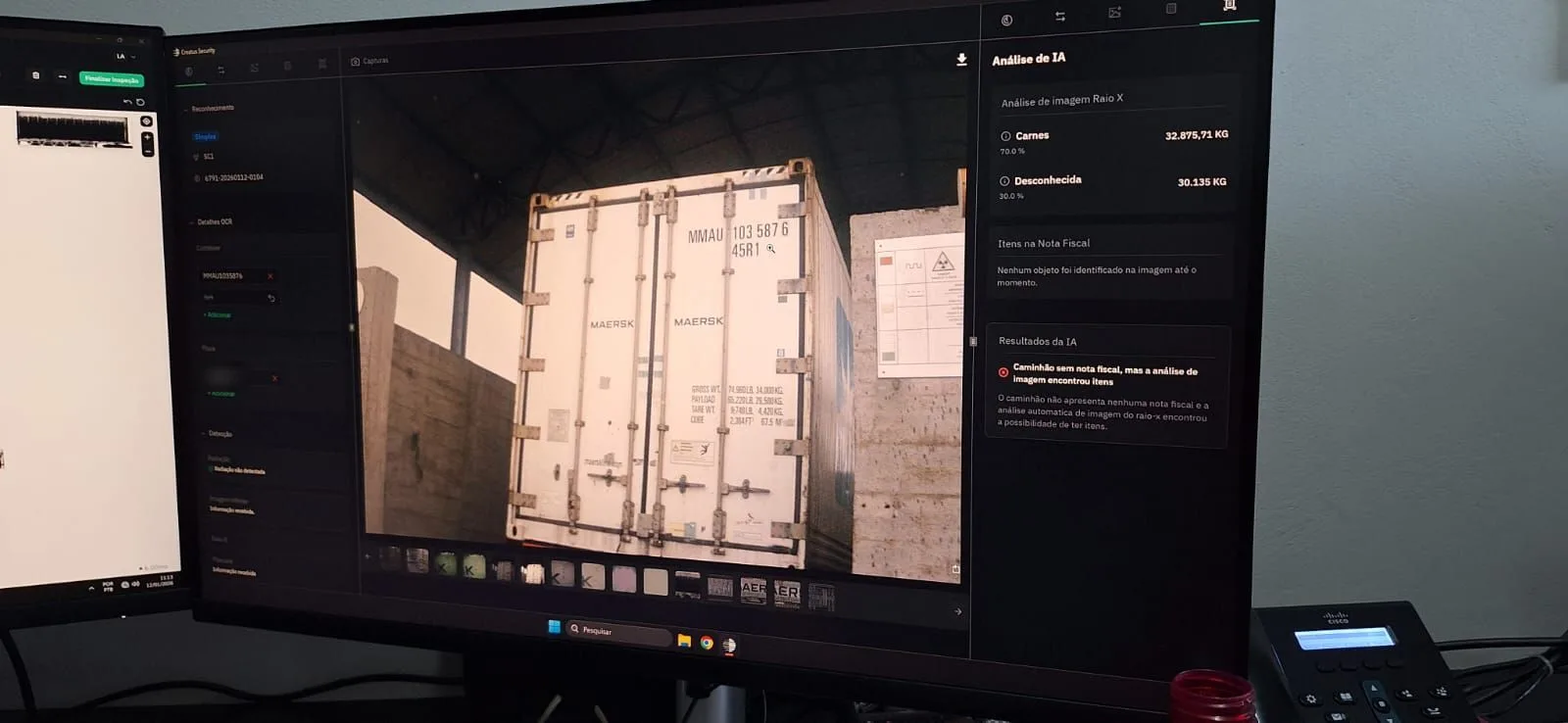
The results are compared and the system checks compliance with the declared invoice: when they don’t match, an alarm and a message point the inconsistency out to the operator.
X-Ray Images Are the Foundation of the AI Analysis
Non-intrusive inspection speeds up the process and preserves the integrity of the cargo. Together with the image, Spectrum Cargo gathers everything the AI needs to analyze each vehicle:
- X-ray images
- Dimensions and weight
- License plate reader (OCR)
- Radiation detector
- Inspection history
- Documents for the entire cargo
The Image Is Analyzed Without Looking at the Invoice
The AI agent that analyzes the image is independent from the agent that analyzes the invoice text. The autonomous agent analyzes the X-ray, infers which cargo categories are present and only then is this result compared with the content of the invoice.
- Image analysis agent: evaluates the X-ray generated by the scanner.
- Text analysis agent: evaluates the content of the invoice.
- Comparison: compliance, or an alert for the inspector.
Cargo Category Identification
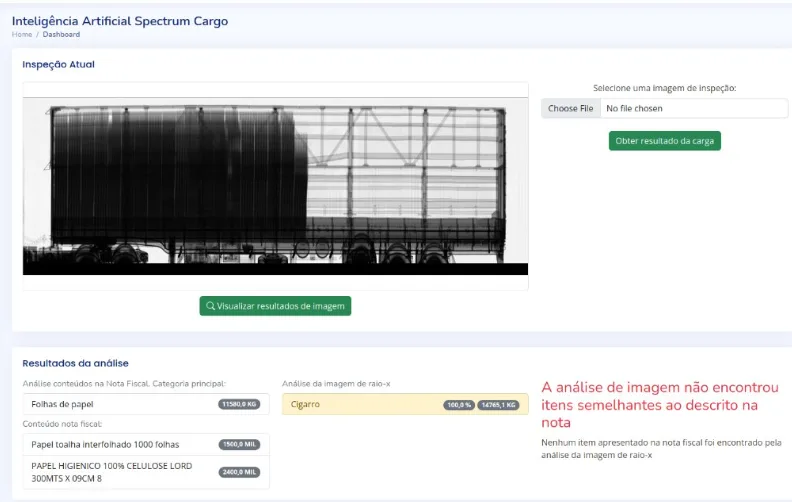
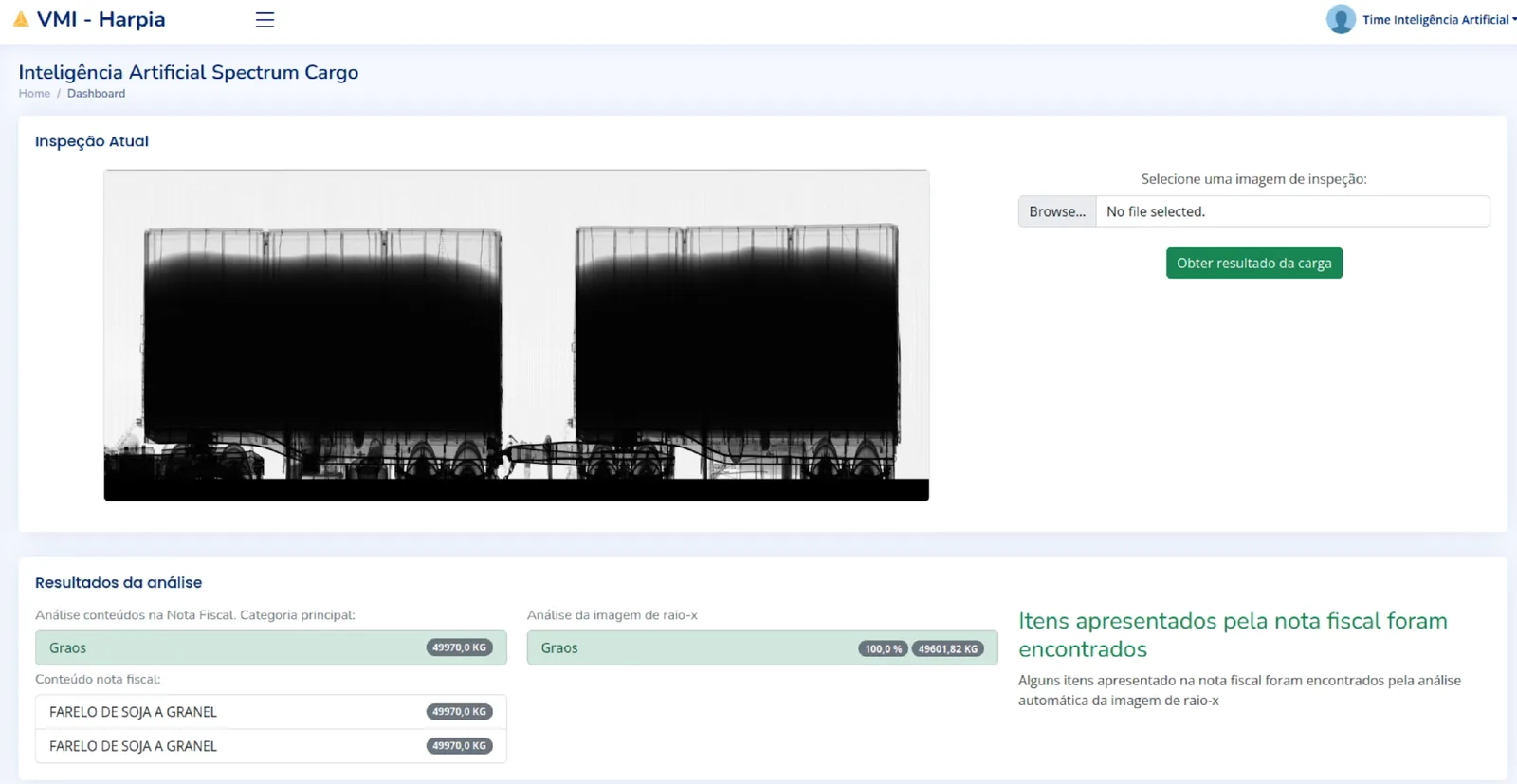
The autonomous agent estimates which cargo categories are present in the inspected vehicle and checks compliance with the declared invoice. In one case, invoice and image agreed: 100% of the load was cigarettes. In another, the invoice charged for sheets of paper while the AI found cigarettes in the image, which triggers an alarm.
Anomaly Detection with a Heat Map
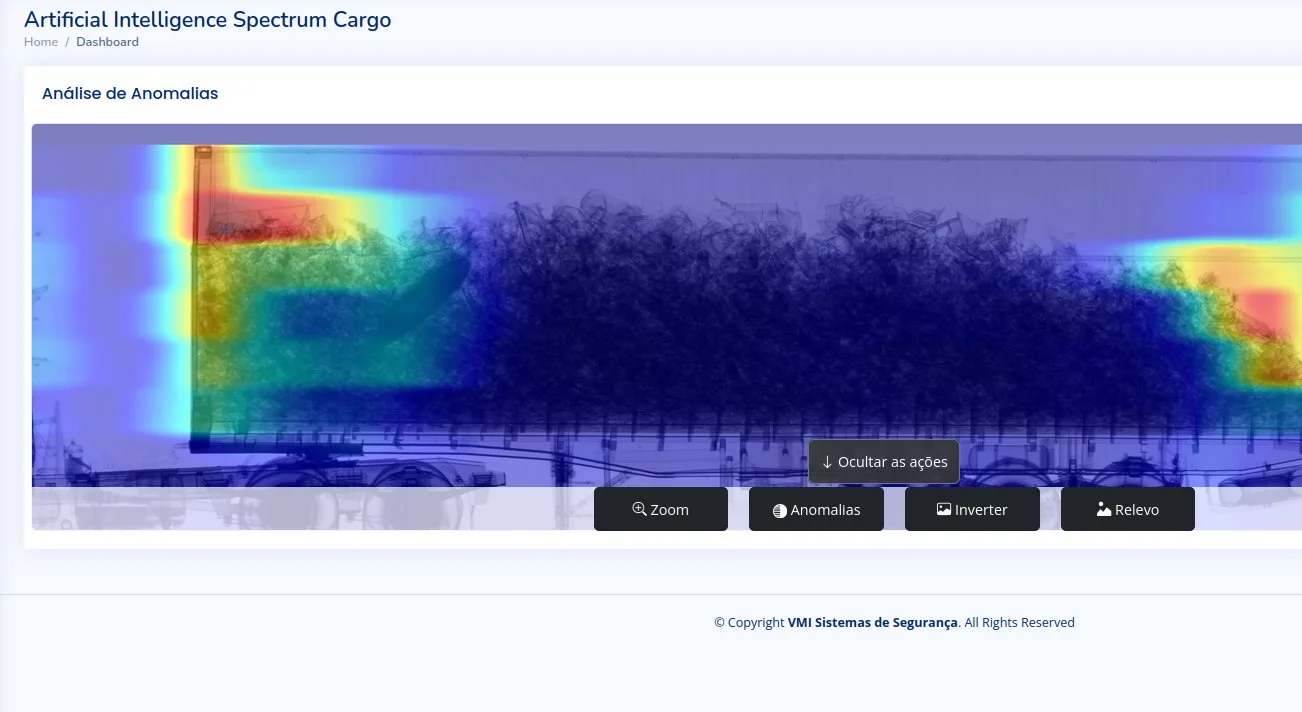
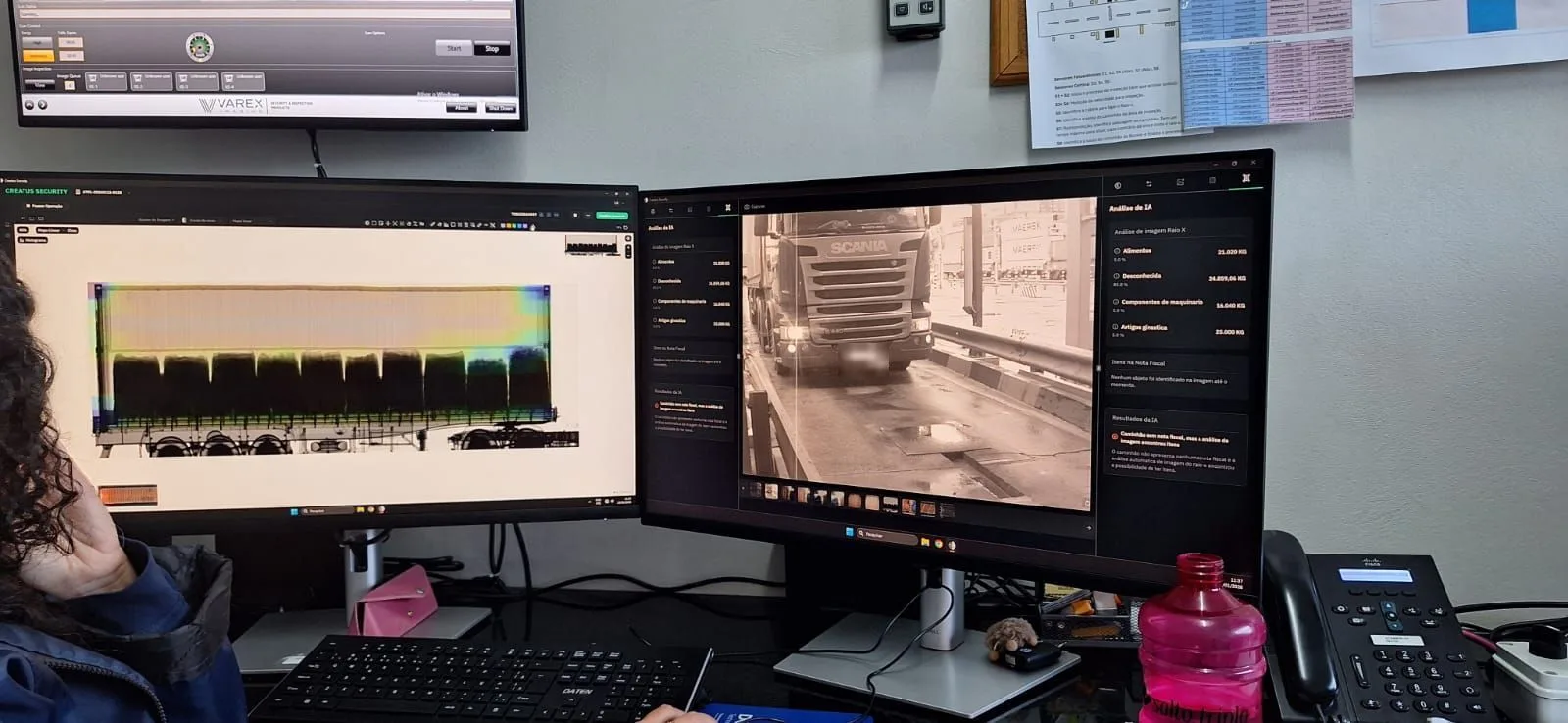
Even when the cargo matches the invoice, the AI looks for regions that don’t fit the typical appearance of that category. The heat map draws attention to the suspicious parts of the image, and filters allow a closer investigation. This feature works for homogeneous loads.
Net Cargo Weight Estimate
Based on previous loads similar to the current one, the AI estimates the cargo’s net weight and compares it with the weight stated in the fiscal documents.
Empty Container Identification
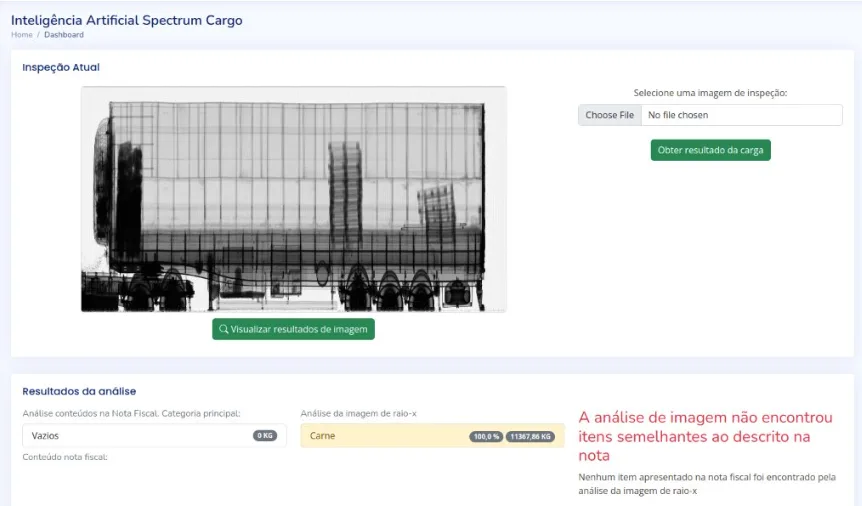
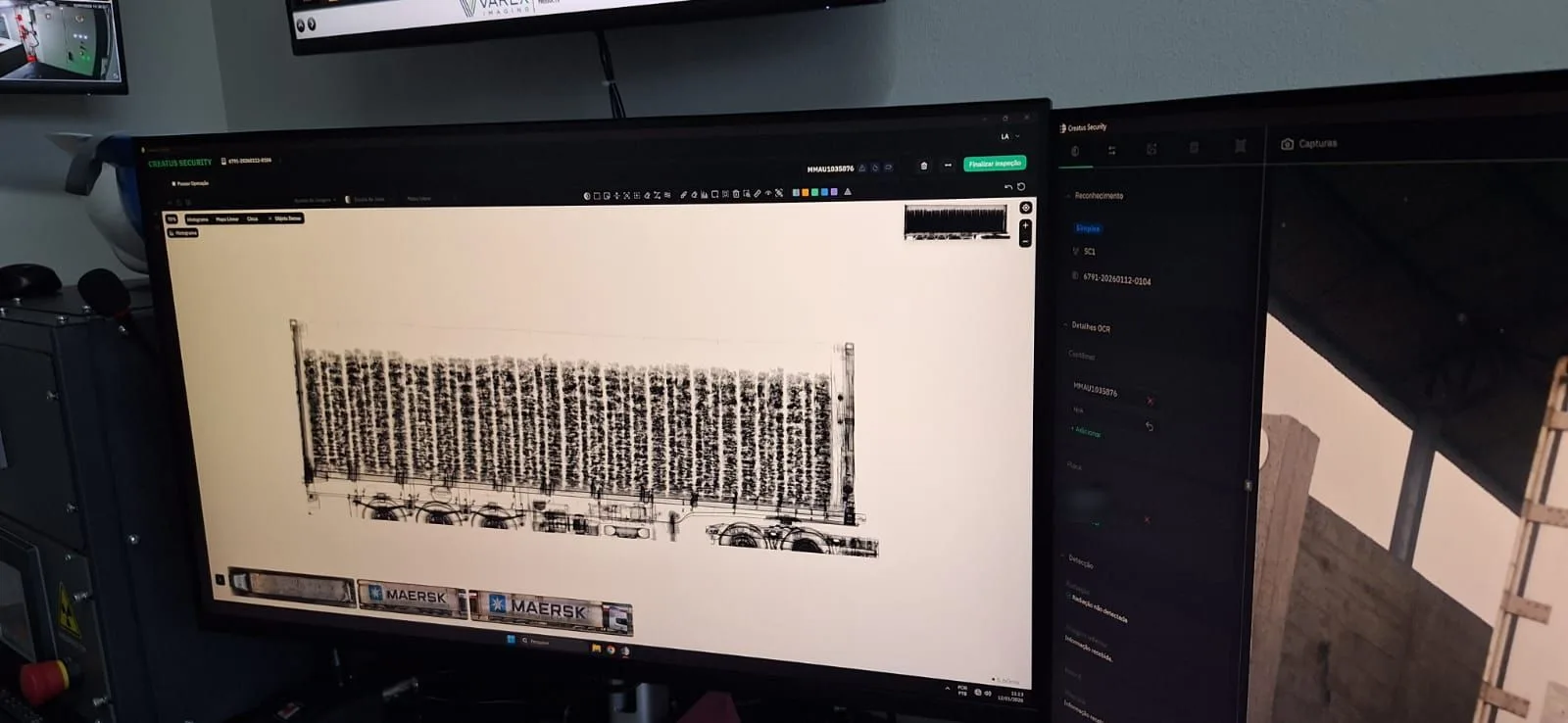
The AI analyzes the image of the inspected container and estimates whether it is really empty. When the fiscal documents declare an empty container and the AI finds cargo inside, such as meat, an alarm and a message point the inconsistency out to the operator.
Estimated Object Count
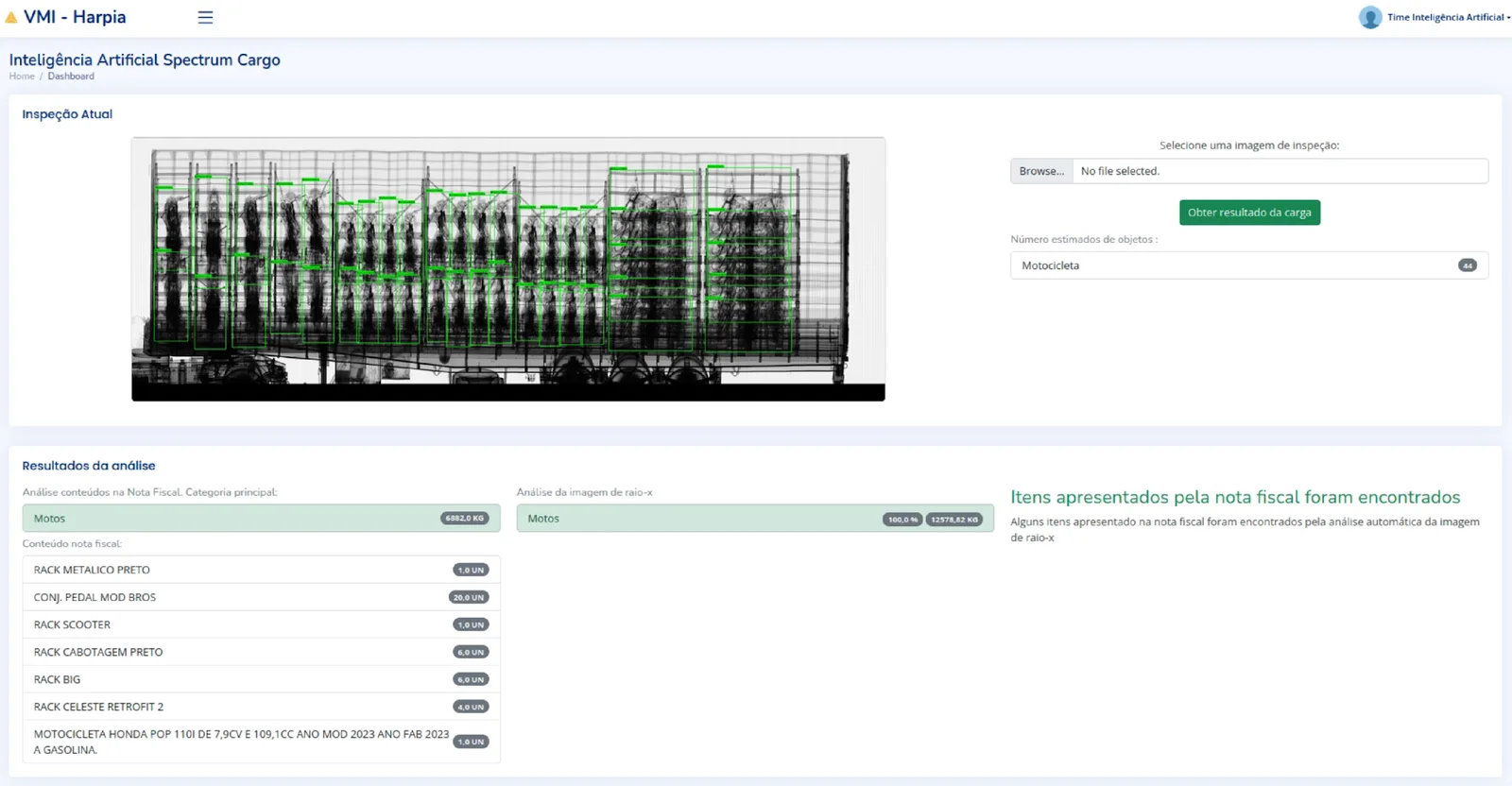
In partially homogeneous loads, the AI locates the objects it knows in the image and estimates how many items of a given category are in the inspected vehicle.
Possible Tax Evasion Detection
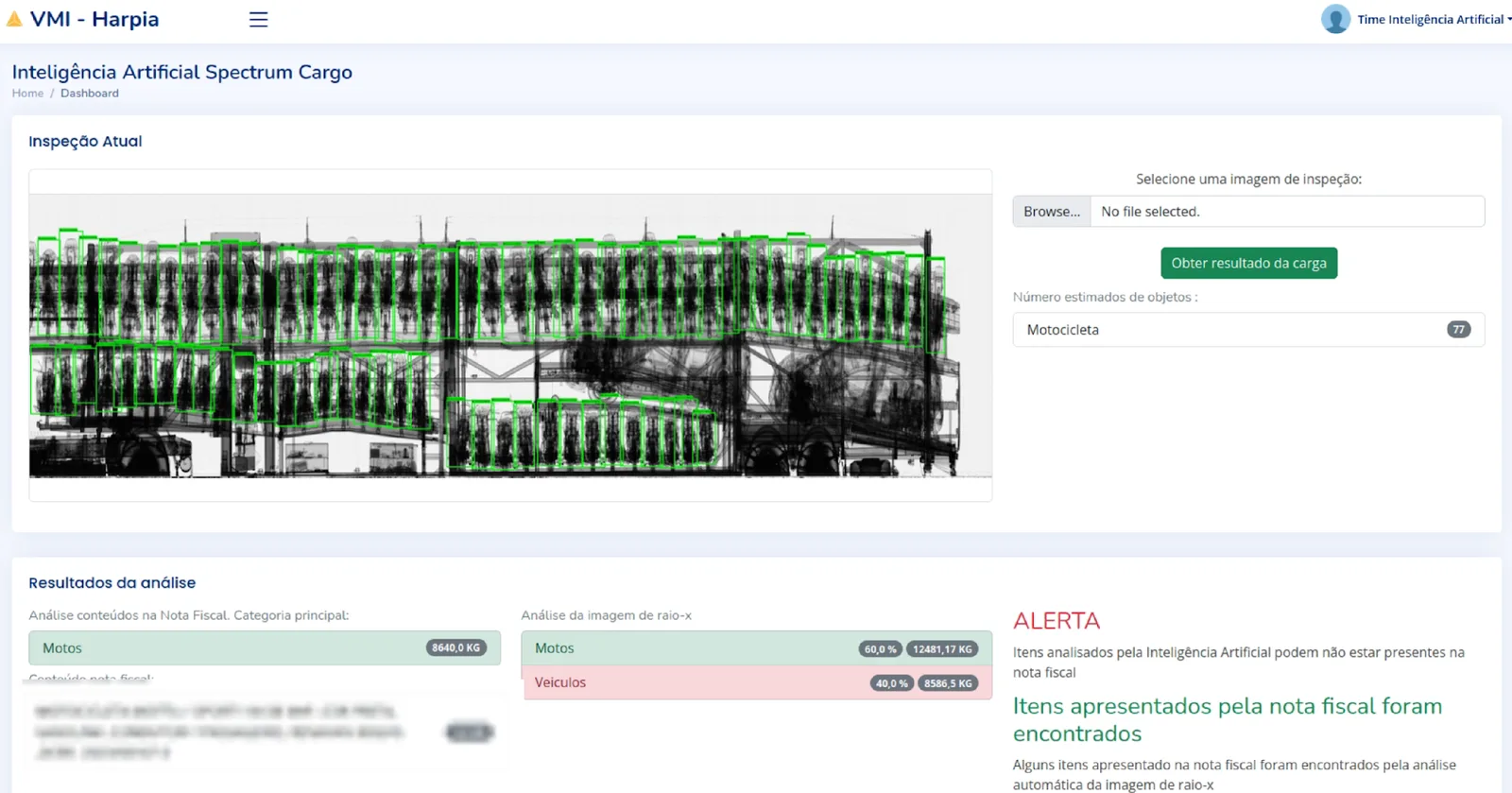
By finding categories in the image that are not on the invoice, the autonomous agent suggests possible inconsistencies for the inspector to review, as in this case, where the AI found motorcycles and vehicles in the load that were not in the fiscal documents.
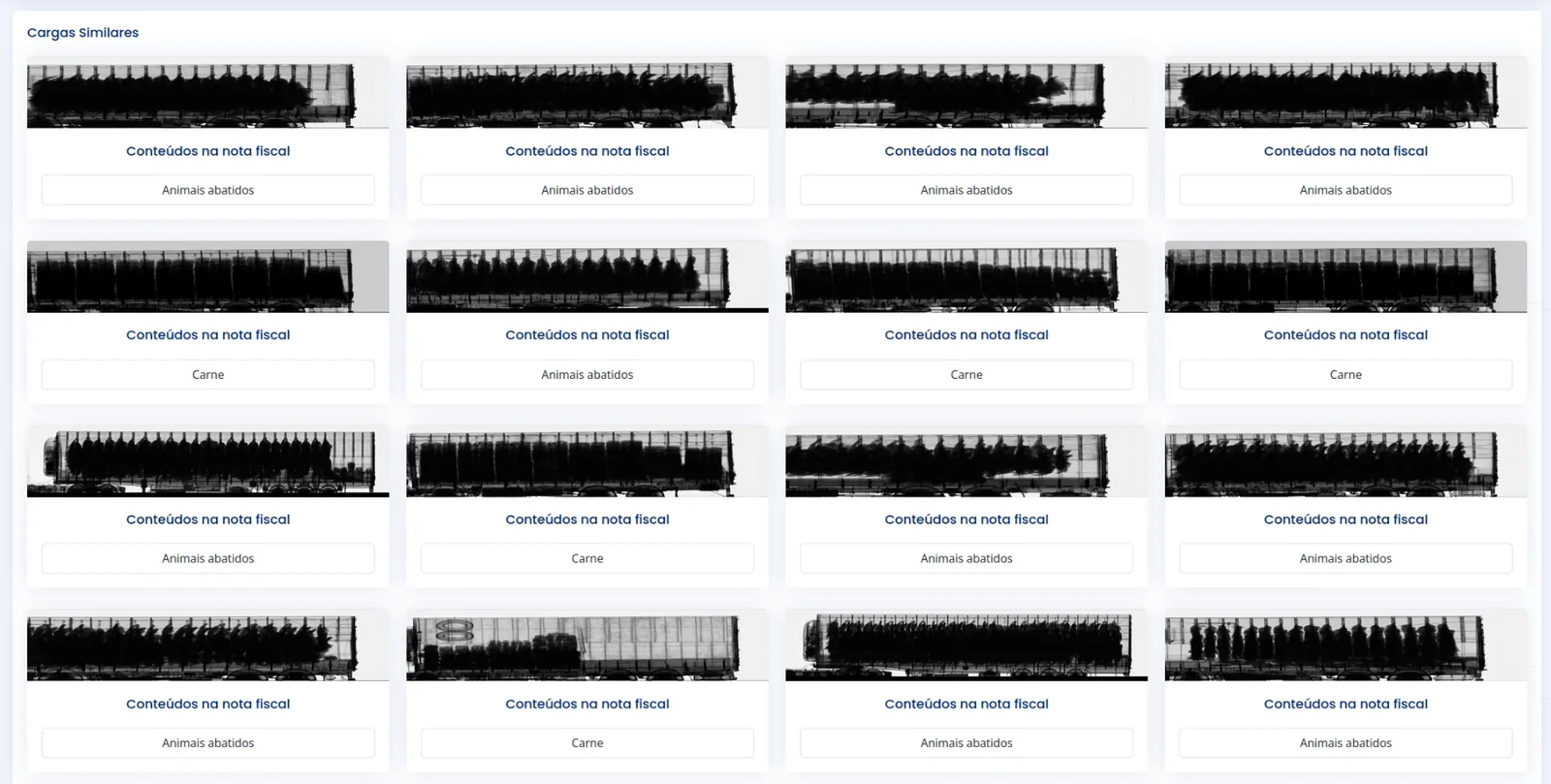
Similar Image Suggestions
The AI shows on screen images of earlier loads similar to the inspected one, with the goods declared for each, so the inspector can confirm the analysis faster. Every analysis is based on the similarity between the images.
The Power of Connected Data
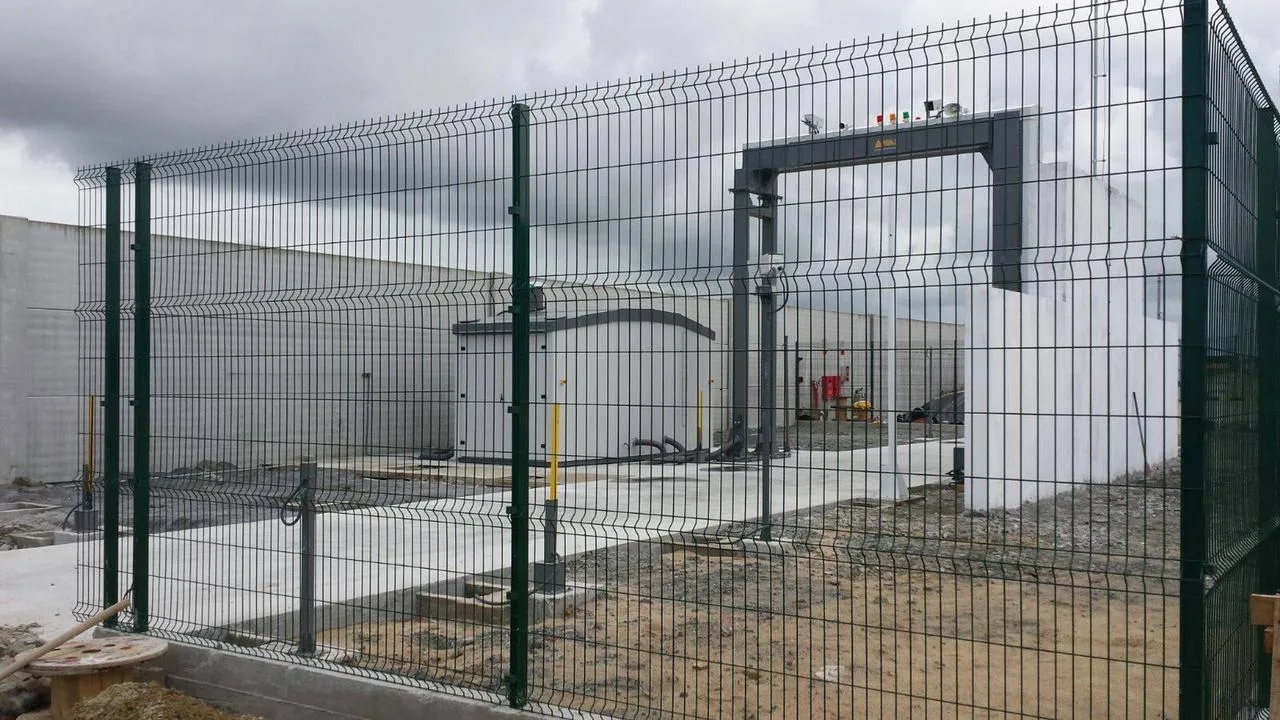
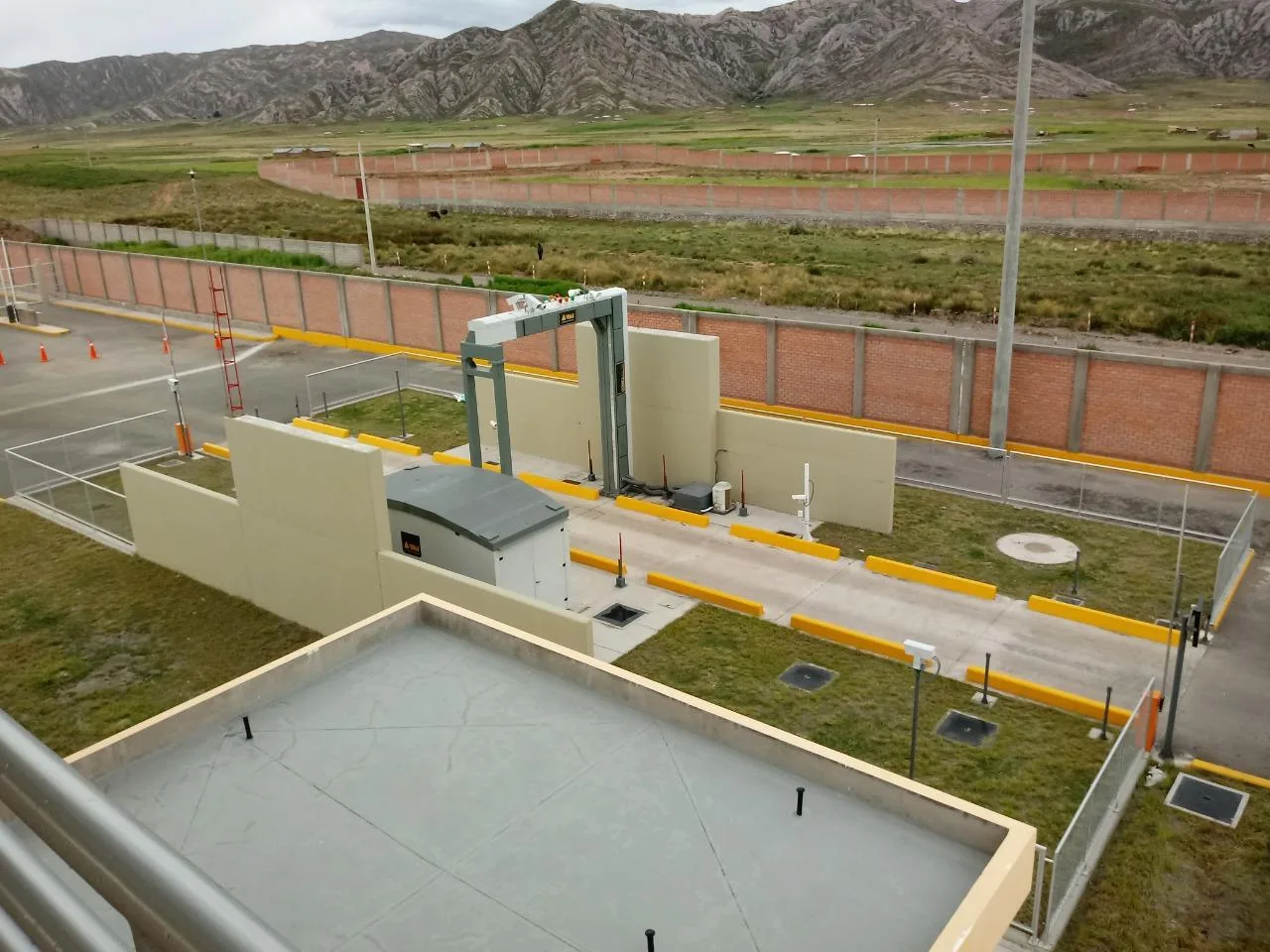
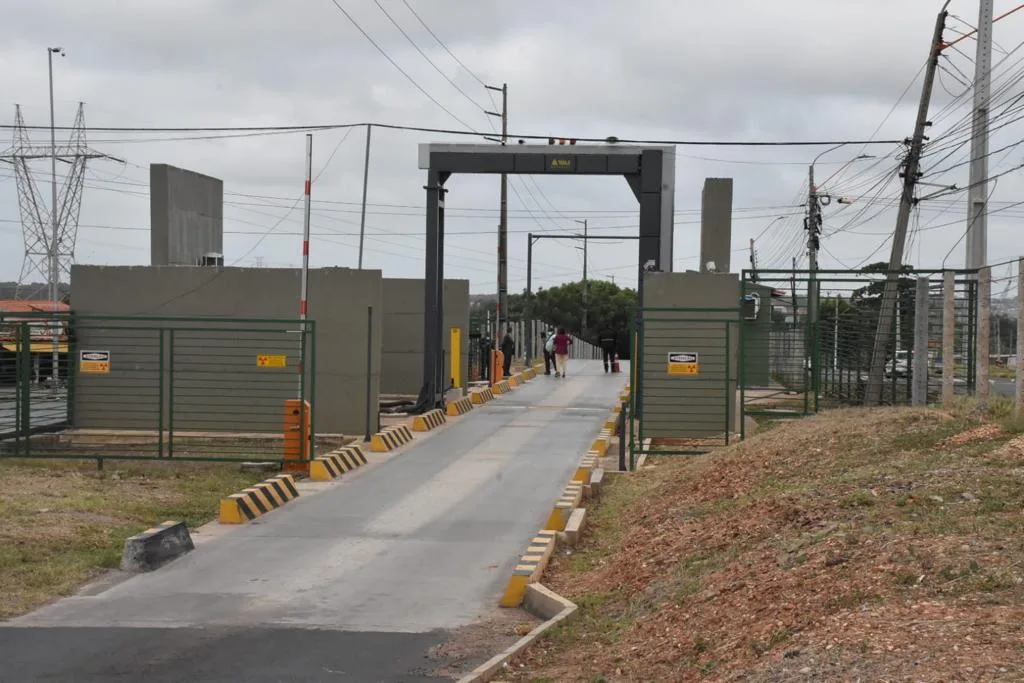
Only full integration between systems gives a complete view of the operation. Several Spectrum Cargo scanners send their data to an integration server and to the artificial intelligence server, which connect to the port’s other systems.
- Data distributed to each area: operations, fiscal and security
- Automatic alerts and notifications for specific situations
- Smart, customizable reports and dashboards to monitor performance and find bottlenecks
AI Supporting Inspectors Every Day
Frequently Asked Questions
How do we know the AI is not influenced by the invoice?
The AI that analyzes the image is completely independent from the analysis of the invoice. It analyzes the image, infers which categories are present and only then is the result compared with the content of the invoice.
What if the inspected vehicle has no invoice?
If the image contains a category known to the AI model, the AI recognizes the goods and points out the inconsistency caused by the missing invoice.
Can inspections be delegated to the AI?
In homogeneous loads, the majority in the operations analyzed, many inspections can be delegated to the AI; in the others, it assists the inspector in the release decision.
What if a homogeneous load shows two different patterns?
The AI can be trained to detect unknown anomalies, identifying a pattern that differs from the rest of the load.
Can the AI compare inspections from different sites?
Yes. The AI can be trained to compare images of vehicles inspected at different checkpoints and point out inconsistencies to the inspector.
Who can access the analyses?
The system has access control with username and password: only authorized inspectors see the results.
A Project Supported by Finep
VMI Security’s development of artificial intelligence for non-intrusive cargo inspection is supported by Finep.
Finep
Financiadora de Estudos e Projetos, the Brazilian Innovation Agency, a public company linked to the Ministry of Science, Technology and Innovation (MCTI).
Talk to a Specialist
* All fields are mandatory